FOMC Meeting: What You Need to Know
Thursday 11 December 2025
The technology sector experienced a significant rally yesterday, 24 November 2025, with Broadcom shares recording their strongest single-day performance since April as investors demonstrated renewed confidence in the artificial intelligence infrastructure market. The semiconductor manufacturer's surge coincided with continued strength in Alphabet shares, highlighting an evolving narrative in AI chip development that extends beyond traditional graphics processing units.
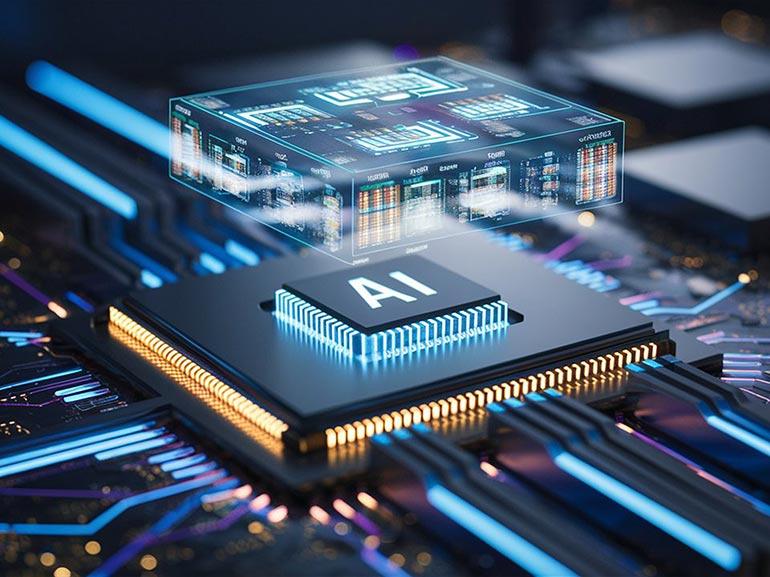
Broadcom shares surged 11.1% on 24 November, marking the S&P 500's strongest performance as investors returned to AI-linked technology companies
Alphabet shares rose over 5%, continuing a 21% rally over the past month, driven by Google's Gemini 3 AI model and seventh-generation TPU chip development
The connection between Broadcom and Alphabet centres on application-specific integrated circuits (ASICs), with Broadcom designing and manufacturing Google's tensor processing units since 2016
Wall Street analysts have raised price targets significantly, with Jefferies setting a $480 target, implying 41% upside potential
The rally reflects broader market enthusiasm for custom AI chips beyond Nvidia's GPU dominance
Broadcom's 11.1% gain positioned the company as the top performer within both the S&P 500 and the Technology Select Sector SPDR Fund (XLK), which tracks the technology sector of the benchmark index. This single-day rally brought the stock's year-to-date performance to approximately 60%, demonstrating sustained investor interest in the company's AI-related business segments.
The company has established itself as a leading supplier of high-performance application-specific integrated circuits (ASICs) for hyperscale cloud providers. These custom chips are designed for specific workloads rather than general-purpose computing, offering optimised performance for particular applications.
Melius Research analyst Ben Reitzes reinforced his buy rating in October 2025, raising his price target by $60 to $475. This could suggest a potential upside of 39.6% from the closing price on 22 November 2025. Reitzes noted that Google and Broadcom have collaborated on custom ASIC development since 2016, with the partnership now in its seventh generation of tensor processing units. (Source: CNBC)
The relationship between Broadcom and Alphabet represents a critical element of Google's AI infrastructure strategy. Broadcom designs and manufactures Google's Tensor Processing Units (TPUs), which serve as the company's proprietary AI chips for its internal infrastructure. These TPUs compete directly with Nvidia's AI graphics processing units, whilst remaining exclusive to Google's operations.
According to CNBC, Google released its seventh-generation TPU, named "Ironwood," in November 2025, a decade after creating its first custom ASIC for artificial intelligence in 2015. The progression may demonstrate Google's long-term commitment to developing proprietary chip technology.
Jefferies analyst Blayne Curtis, who maintains the highest price target amongst analysts covering Broadcom, elevated his price target by $65 to $480 in early November. This target implies potential upside of 41% from Friday's closing price. Curtis identified an "inflection point" for ASICs as Google's custom chip requirements continue expanding.
The analyst noted that, while Google has long been Broadcom's primary ASIC customer, volumes are expected to become substantially more significant in calendar years 2026 and 2027. Google's token processing capacity increased from 480 trillion in April 2025 to 1,300 trillion by October 2025, with further growth anticipated as multimodal AI models require additional computational resources.
Alphabet shares have outperformed fellow "Magnificent Seven" technology companies over the past month with a 21% gain, propelling broader market indices higher during recent trading sessions. According to Reuters, Alphabet is advancing towards a $4 trillion valuation as AI-fuelled gains accelerate.
Investor enthusiasm stems from several recent developments:
Gemini 3 AI Model: Google's latest artificial intelligence model has received positive reception from both investors and industry observers. Salesforce CEO Mark Benioff endorsed the technology, contributing to market confidence.
Ironwood TPU: The seventh-generation tensor processing unit announced in November 2025 represents Google's continued investment in proprietary AI infrastructure.
AI Image Generation: Advancements with "Nano Banana Pro" demonstrate Google's expanding capabilities across multiple AI applications.
Google Antigravity Platform: A new agent platform extending Google's AI ecosystem.
Yahoo Finance reported that Alphabet reached a fresh record high on optimism surrounding the next version of its Gemini AI tool, with shares rising to lead a broader technology sector rally on 24 November 2025.
Dan Ives, global head of technology research at Wedbush Securities, characterised Broadcom and Alphabet as "new AI plays the market is rediscovering." Ives, who holds both stocks in the Dan IVES Wedbush AI Revolution ETF, stated: "This could be the most proven ASIC chip in the market, and the AI Revolution is still in its early days.”
The analyst described the shift in Street sentiment as representing "a historic quick turnaround to the very bullish" perspective currently prevailing amongst institutional investors.
Melius Research's Reitzes highlighted that Google's tensor processing unit has become "the most proven ASIC" in the market outside of Nvidia's GPU offerings for AI workloads. He noted that the TPU is "rapidly becoming a larger part of Alphabet's growth strategy," with implications extending beyond Google to benefit Broadcom through its design expertise.
Interestingly, Meta Platforms is reportedly considering utilising Alphabet's custom chips for its data centres, potentially expanding the market for Google's TPUs beyond the company's internal infrastructure.
The rally in Broadcom and Alphabet shares occurred as the Nasdaq Composite posted its strongest single-day gain since May 2025, with the S&P 500 also recording substantial advances. The Technology Select Sector SPDR fund saw Broadcom as its top performer yesterday.
The movement appears to represent a resurgence of investor confidence in the artificial intelligence infrastructure sector, following a period of consolidation and concerns about valuation levels. Alphabet's outperformance relative to other Magnificent Seven stocks suggests market participants are identifying specific catalysts and competitive advantages rather than applying uniform sector-wide enthusiasm.
The partnership between Broadcom and Alphabet demonstrates an alternative approach to AI infrastructure development, with custom ASICs offering potential advantages over general-purpose GPUs for specific workloads. This differentiation has attracted investor attention as the AI sector matures beyond initial infrastructure buildout phases.
Broadcom's 11.1% surge and Alphabet's strength reflect increasing market recognition of their strategic partnership in custom AI chip development. Broadcom manufactures Google's Tensor Processing Units (TPUs), a competitive alternative to Nvidia's GPUs.
Analysts forecast 39.6% to 41% upside for Broadcom due to rising custom AI chip demand. Alphabet's push toward a $4 trillion valuation is supported by proprietary AI infrastructure investments.
As Google's computational needs grow, the Broadcom partnership, benefiting from rising ASIC volumes, is crucial for both companies, suggesting that many investors favour those with differentiated AI infrastructure.
*Past performance does not reflect future results. The above are only projections and should not be taken as investment advice.
ASICs are custom chips designed for specific workloads, unlike general-purpose GPUs. Google's TPUs (Tensor Processing Units), built by Broadcom, are a type of ASIC dedicated to AI, and they can potentially outperform general-purpose solutions in certain AI applications.
The partnership, which began in 2016 and is now in its seventh generation, positions Broadcom as the primary designer and manufacturer of Google's proprietary AI chips. As Google's computational needs expand, evidenced by token processing increasing from 480 trillion to 1,300 trillion between April and October 2025, Broadcom is expected to benefit from growing custom chip volumes.
Alphabet shares have risen 21% over the past month, outperforming other Magnificent Seven technology companies. This market enthusiasm is fueled by the release of Google's Gemini 3 AI model, the seventh-generation Ironwood TPU, advancements in AI image generation, and new agent platforms, demonstrating progress across multiple AI initiatives.



Learn insights through informative videos, webinars, articles, and guides with our comprehensive Trading Academy.
Discover what’s trending in and outside of Plus500.
This information is written by Plus500 Ltd. The information is provided for general purposes only, and does not take into account any personal circumstances or objectives. Before acting on this material, you should consider whether it is suitable for your particular circumstances and, if necessary, seek professional advice. No representation or warranty is given as to the accuracy or completeness of this information. It does not constitute financial, investment or other advice on which you can rely. Any references to past performance, historical returns, future projections, and statistical forecasts are no guarantee of future returns or future performance. Plus500 will not be held responsible for any use that may be made of this information and for any consequences that may result from such use. Hence, any person acting based on this information does so at their own discretion. The information has not been prepared in accordance with legal requirements designed to promote the independence of investment research.